Parrot's Feather Removal at Dafan Ponds, Llanelli
Introduction
Dafan Ponds, located in the heart of Llanelli, had long been a beautiful ecological habitat, home to diverse wildlife and a haven for local communities. Over time, however, the invasive species known as Parrot's Feather (Myriophyllum aquaticum) began to dominate large sections of the pond. Its rapid growth threatened the natural biodiversity, disrupted water flow, and posed a significant ecological risk. Carmarthenshire County Council, recognising the need for immediate action, enlisted Enviroculture to develop a strategic plan for its removal.
Initial Assessment and First Visit
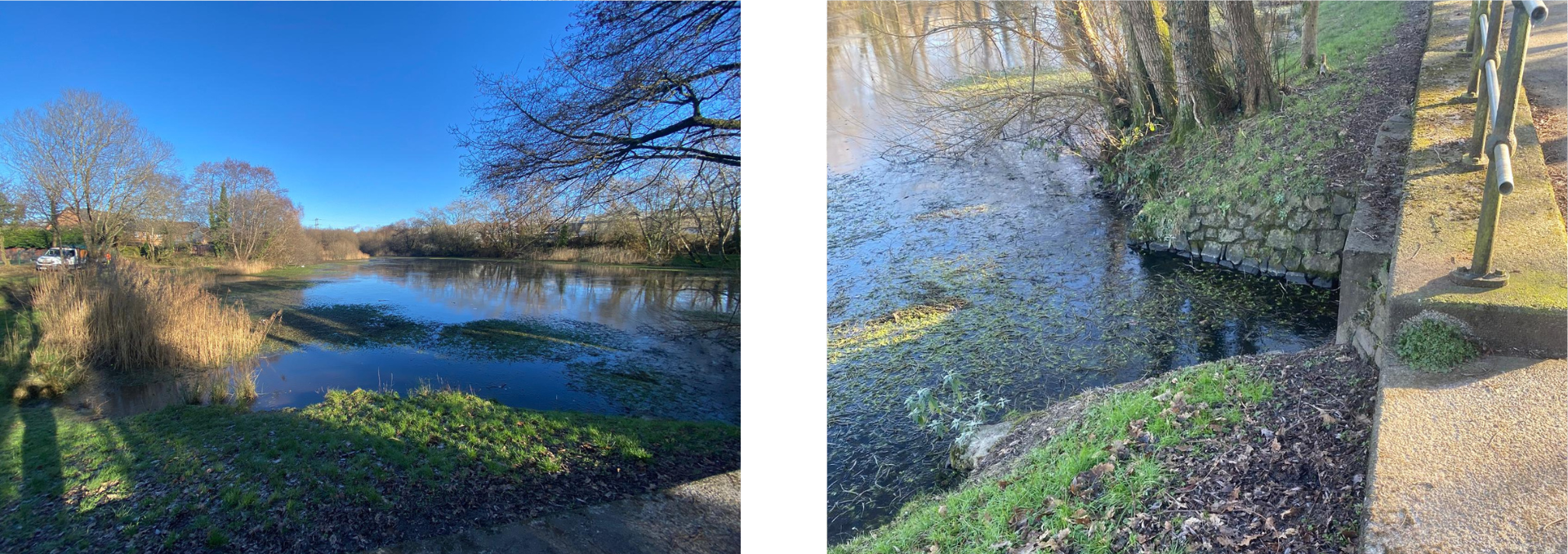
When we first visited the site, the scale of the infestation was immediately clear. Parrot's Feather had established thick mats across the surface of Dafan Ponds, choking native plants and stagnating water flow. Traditional excavation methods were ruled out early due to the pond's landscape and limited access for heavy machinery. It became clear that we would need a more creative approach to tackle the problem.
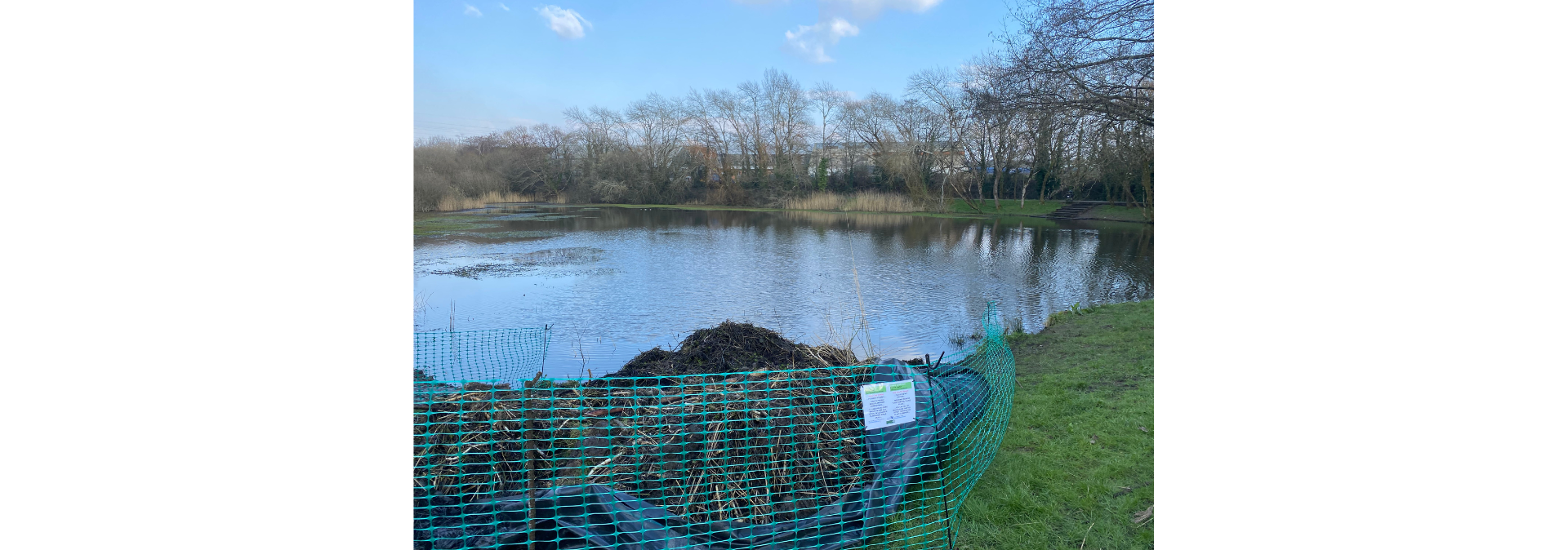
We began by deploying a winch and rake system. This method allowed us to manually pull the dense floating weed mats toward the bank. The floating weed was collected and left to drain on geotextile sheeting for one week. This drying process was crucial to prevent regrowth and to make transport easier and more efficient. Straw bales and terram were strategically placed to prevent any fragments from escaping downstream, safeguarding the local waterway.
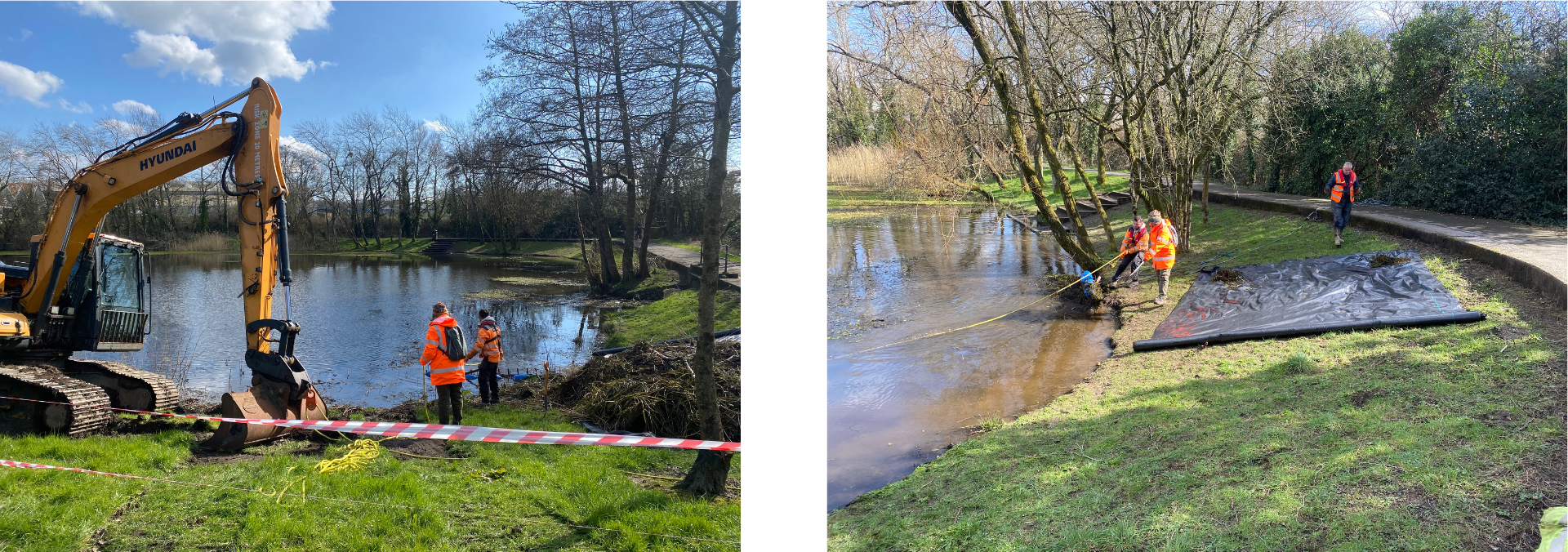
Despite some challenges with access and the weight of the weed, the team successfully cleared large sections of the infestation. Once dried, the weed was wrapped securely in terram and prepared for transport to a licensed waste facility in Merthyr Tydfil.
Second Visit and Advanced Techniques
After the first visit, it became evident that while surface-level infestations were managed, deeper-rooted sections persisted. After monitoring the site for several months, the decision was made to deploy a specialist amphibious boat: the Truxor T50. This machine was capable of cutting through submerged roots and collecting vegetation from difficult-to-reach areas.
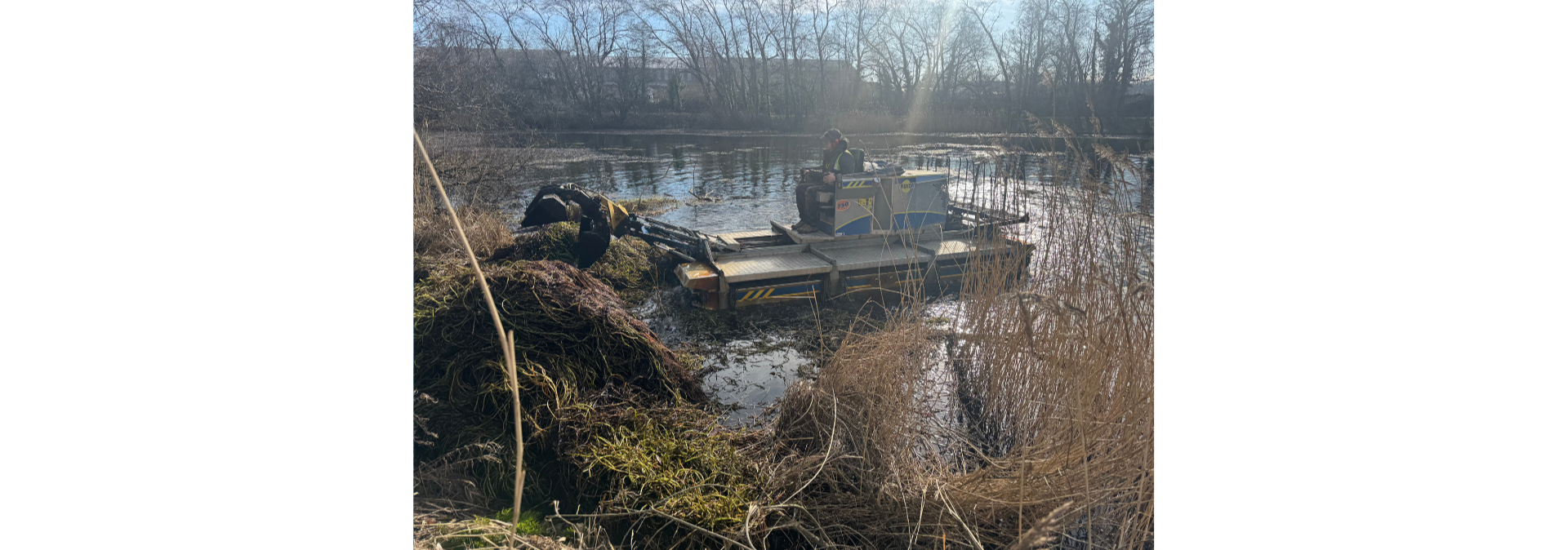
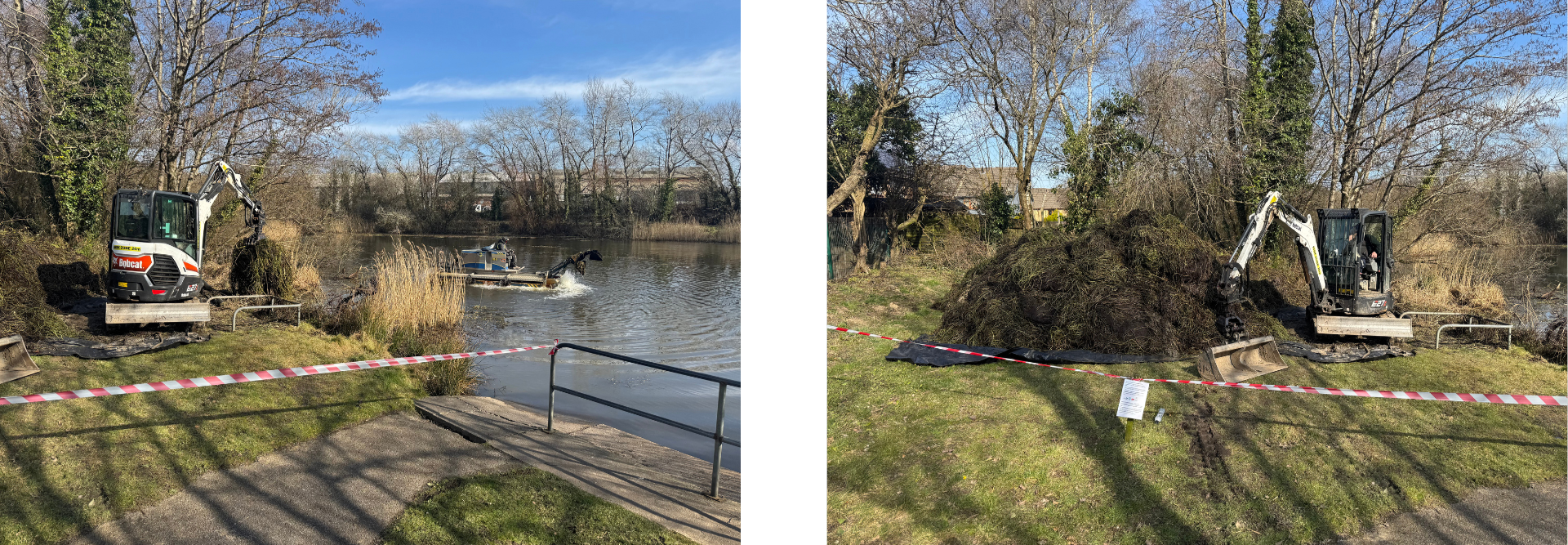
The Truxor cut through the submerged roots that had been unreachable during the first visit. A 2.5-ton digger stationed on the bank worked simultaneously to grab and lift the collected weed from the water, placing it onto geotextile for draining.
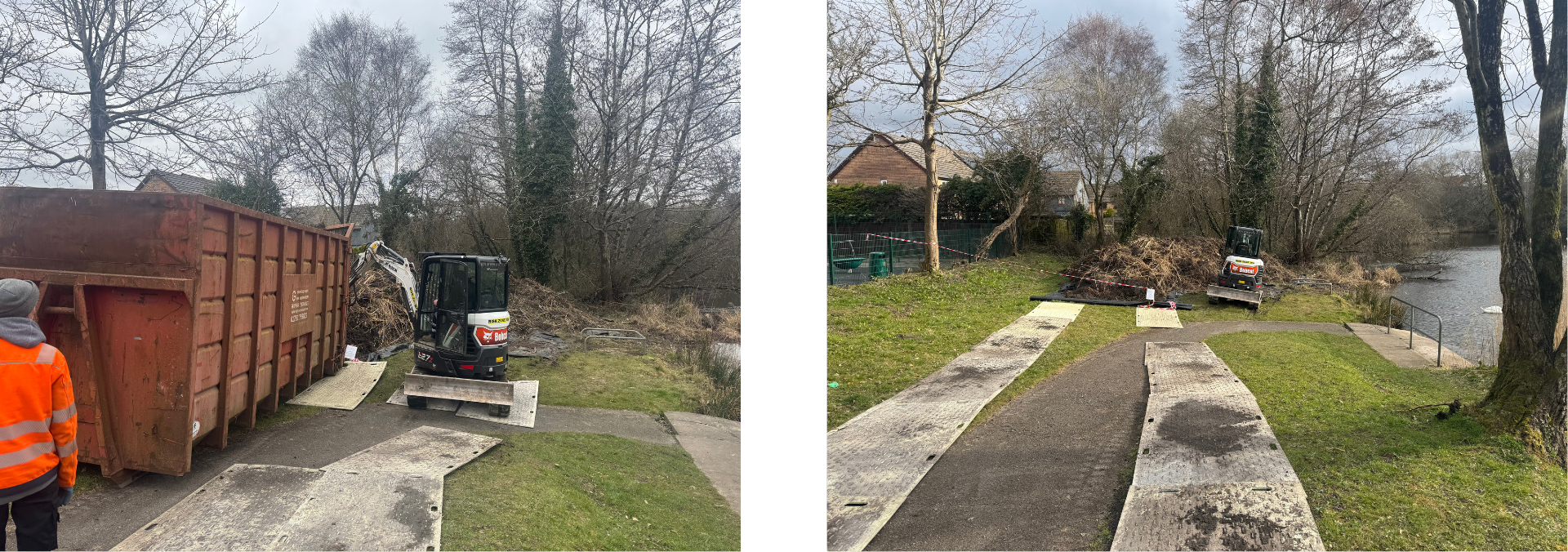
We also laid down ground protection mats to facilitate the access of roll-on roll-off skips, ensuring the surrounding environment remained protected during transportation. The mats prevented any damage to the grass and pathways as the heavy equipment moved the waste to the skips for removal.
Overcoming Challenges and Environmental Safety
The project did face some challenges. During the second visit, branches had to be removed to provide clear access for the lorry to reach the pond side. Additionally, one of the skips became overloaded and was too heavy to be lifted safely. This required partial unloading back into another skip before transportation could continue smoothly.
Biosecurity was also a major focus. Following the 'Check, Clean, Dry' protocol, all machinery was thoroughly cleaned to prevent any risk of spreading invasive species to other water bodies. We also installed additional silt nets and straw bales to further safeguard the surrounding ecosystem.
Final Results and Restoration
The combined efforts of the two visits led to a 95% reduction of Parrot's Feather across Dafan Ponds. Water flow was restored, native species began to reappear, and the local ecosystem showed clear signs of recovery. Public access was fully restored, with pathways and bank areas made good and secure.
Carmarthenshire County Council expressed their satisfaction with the outcome, noting the professionalism and ecological sensitivity of the work carried out.
Ongoing Maintenance and Future Plans
Following the success of the two-phase removal, ongoing maintenance is now planned to prevent Parrot's Feather from re-establishing itself. The Truxor T50 is scheduled to make regular visits to Dafan Ponds to keep growth under control, avoiding the large build-ups seen in the past.
Additionally, an area has been established on-site specifically designed for controlled decomposition of the removed vegetation. This will not only reduce transport costs but also provide a sustainable solution for managing the waste material over time. Regular monitoring and a proactive approach will ensure Dafan Ponds remains a healthy and thriving ecosystem.
Accreditations